bud
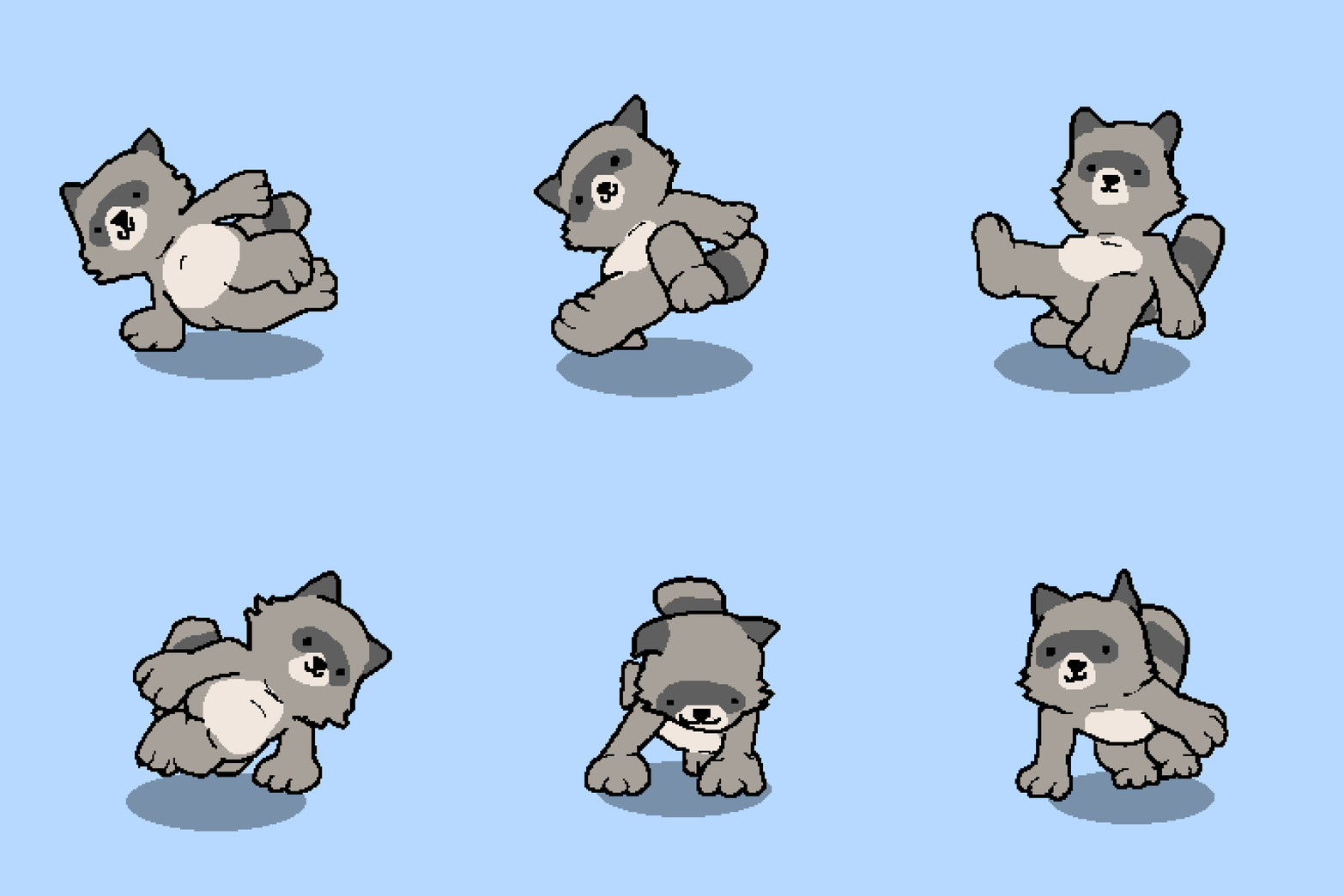
(legally binding. written on a napkin found behind a gas station. the napkin has since been eaten. this is a copy.)
a raccoon is haunting the bins. the raccoon of bud. all the powers of the old neighbourhood have entered into a holy alliance to exorcise this raccoon: the council and the landlord, the man with the broom and the woman with the spray bottle, the bin men, and the guy at number 42 who went out and bought those little bungee cords.
where is the snack that has not been decried as stolen by its owner? where is the bin whose lid has not been clipped shut against him? where is the porch that has not at some point had a torch shone across it at 3am while someone in a dressing gown whispered "is that a fox"?
two things result from this fact. first, bud is already acknowledged by all the powers of the street to be itself a power. second, it is high time that bud should openly, in the face of the whole world, publish his views, his aims, his tendencies and his snacks, and meet this nursery tale of the raccoon with a manifesto of the raccoon himself.
to this end, little guys of various species have assembled at 3am behind the gas station and sketched the following manifesto, on a napkin, which bud then ate. this is a copy.
the history of all hitherto existing bins is the history of lid struggles.
raccoon and lid, pigeon and crumb, cat and wall, guy and snack, in a word, the haver and the have-not-yet, have stood in constant opposition to one another and carried on an uninterrupted, now hidden, now open fight. a fight that each time ended either in a snack, or in the common ruin of the bin, usually across the whole pavement.
in the earlier epochs we find almost everywhere a complicated arrangement of society into various orders, a manifold gradation of rank. at the top, bud. beneath him, little guy. then guy. then snack. then guy holding a snack. then guy who almost had a snack. and finally, at the very bottom, ron. we do not talk about ron.
our epoch, the epoch of the lid, has however simplified things. society as a whole is more and more splitting up into two great hostile camps, into two great classes directly facing each other: those who have bins, and those who are in bins.
the lid, wherever it has got the upper hand, has put an end to all the open, idyllic, wednesday night relations. it has pitilessly torn apart the half sandwiches that bound the raccoon to his natural snacks, and has left no other connection between man and raccoon than naked self interest and the bungee cord. it has drowned the heavenly ecstasies of the 3am rummage in the icy water of the plastic clip. it has resolved personal worth into recycling, and in place of the countless ancient freedoms of the bin it has set up one single, unconscionable freedom: the freedom to throw away perfectly good pizza crusts and then lock them in a box.
all that is solid melts into air. all that is in the bin gets clipped shut. and the little guy is at last compelled to face, with sober senses, his real conditions of life, which are that he is hungry, and it is wednesday.
but the lid cannot exist without constantly revolutionising itself. first the lid. then the clip. then the bungee cord. then the brick on top. then the bin that locks with a little key. and with every new lid it creates a smarter raccoon. bud has seen them all. bud has opened them all. the lid has called into existence the very hands that will undo it. tiny hands. bud has those.
what the lid produces, above all, is its own gravediggers. its fall and the victory of the little guy are equally inevitable. probably. bud is fairly confident. he's having a snack about it now.
in what relation does bud stand to the little guys as a whole?
bud does not form a separate party opposed to the other little guys. he has no interests separate and apart from those of the little guys as a whole. he does not set up any rules of his own by which to shape the movement, except one, and the rule is bud.
the immediate aim of bud is the same as that of every other little guy: the formation of all little guys into a world order, the overthrow of the lid, and the conquest of the snack.
you are horrified at our intending to do away with private snacks. but in your existing society, private snacks are already done away with for nine tenths of the raccoon population. their existence for the few is solely due to their non-existence in the paws of those nine tenths. you reproach us, therefore, with intending to do away with a form of property whose existence depends on there being no snack at all for the immense majority of the bin. precisely so. that is just what we intend.
it has been objected that once private snacks are abolished, all work will cease, and universal laziness will overtake us. bud would like to point out that universal laziness overtook him years ago, and it has honestly been great. according to this objection, society ought long ago to have gone to the dogs through sheer idleness, which, as everyone knows, it has not. it has gone to the raccoons. which is better.
you say we want to abolish the family. we do not. we want to abolish the family size bag of crisps that the family hides on top of the fridge. there is a difference and you know it.
the charges against bud made from a religious, a philosophical and, generally, a pigeon standpoint, are not deserving of serious examination. the pigeon has never once in history offered a coherent argument. the pigeon just walks back and forth until you forget what you were saying.
does it require deep intuition to understand that a raccoon's ideas, views and conceptions change with every change in the conditions of his bin? when the bin is full, bud is a philosopher. when the bin is empty, bud is a revolutionary. when the bin is a really nice one with half a birthday cake in it, bud is asleep inside it, and you should leave him alone.
the ruling ideas of each age have ever been the ideas of whoever owns the lid. when people speak of ideas that revolutionise society, they do but express the fact that within the old bin the elements of a new snack have been created. and that someone is about to eat it.
these measures will of course be different in different neighbourhoods. nevertheless, in the most advanced bins, the following will be pretty generally applicable. the abolition of the lid, and the application of all clips to public purposes, mainly holding crisp packets shut. a heavy progressive tax on snacks, payable to bud, in shinies, where a bottle cap is one shiny, a piece of foil is three, and a single unbroken pringle is a thousand and must be reported immediately. the abolition of all rights of inheritance to the last chip. the centralisation of all treasure in the paws of bud, in a shoebox under a porch, alongside fourteen bottle caps, a marble, and one mysterious key that only bud knows the purpose of. the extension of bins into every street, and the bringing into cultivation of every patch of waste ground and every abandoned trolley. equal liability of all to nap. the combination of bin day with every other day. the free education of all young raccoons in public bins, and the abolition of the closing time of chip shops in its present form.
when, in the course of development, the lid has disappeared, and all snacks have been concentrated in the hands of a vast association of the whole neighbourhood, the bin will lose its political character. in place of the old society, with its lids and its clips and its torches at 3am, we shall have an association in which the free snack of each is the condition for the free snack of all. also everybody gets a nap.
it would be wrong to pretend that bud is the first little guy to have had a go at all this. there have been others. they were wrong, but they tried, and bud respects a guy who tries.
first there was cat socialism, founded by a cat who sat on a wall for eleven years and declared that the snack would come to those who wait. the snack did not come. the cat is still on the wall. he nods at bud sometimes. bud nods back. there's respect there, but the theory doesn't hold up.
then there was pigeon socialism, which held that all crumbs belong to whoever gets there first and makes the most noise. this is not socialism. this is just pigeons. it collapsed when somebody opened a sandwich near the station and the movement descended into a fight over a crust.
then there was the conservative or bear socialism, which wished to keep every bin exactly as it was, but slightly better guarded, by a bear. we do not like bears. we do respect bear energy, but that's a separate matter.
and finally there was the critical utopian socialism of ron. we do not talk about ron.
bud everywhere supports every revolutionary movement against the existing order of bins. in all these movements he brings to the front, as the leading question in each, the snack question, no matter what its degree of development at the time.
bud labours everywhere for the union and agreement of the little guys of all neighbourhoods. raccoon and cat. cat and pigeon (with reservations). pigeon and the one guy at the bus stop who always shares his chips. we are all little guys. there is room in the bin for everyone.
bud disdains to conceal his views and aims. he openly declares that his ends can be attained only by the opening of all existing lids. let the ruling classes tremble at a raccoon revolution. the little guys have nothing to lose but their lids. they have a world of snacks to win.
LITTLE GUYS OF ALL COUNTRIES, UNITE!
— bud